

My paternal grandmother died when I was five, so I mostly understood her through family stories. I was told Pauline Perlmutter Steinem had four sons, founded the first vocational high school in my hometown of Toledo, Ohio, and was elected to the school board.
Only much later after a feminist historian wrote a monograph about her did I learn my grandmother was elected on a coalition ticket with the socialists and the anarchists by organizing women to go to the polls in large groups — otherwise, men and boys kept them away by what we would now call sexual harassment. Indeed, she attended international women’s meetings and suffragist conferences, and addressed Congress as part of the campaign for the vote.
I remember my grandmother for her own courage, but also as an example of the ways women’s history can be lost, even in our own families. Perhaps it is the grandmother or aunt or cousin who is left out of family stories whose example we need most to learn. Uncovering neglected pasts makes a difference — after all, we need stories of real lives to inspire us.
Below are discoveries of my own family history that taught me about women’s history and the politics of all history.
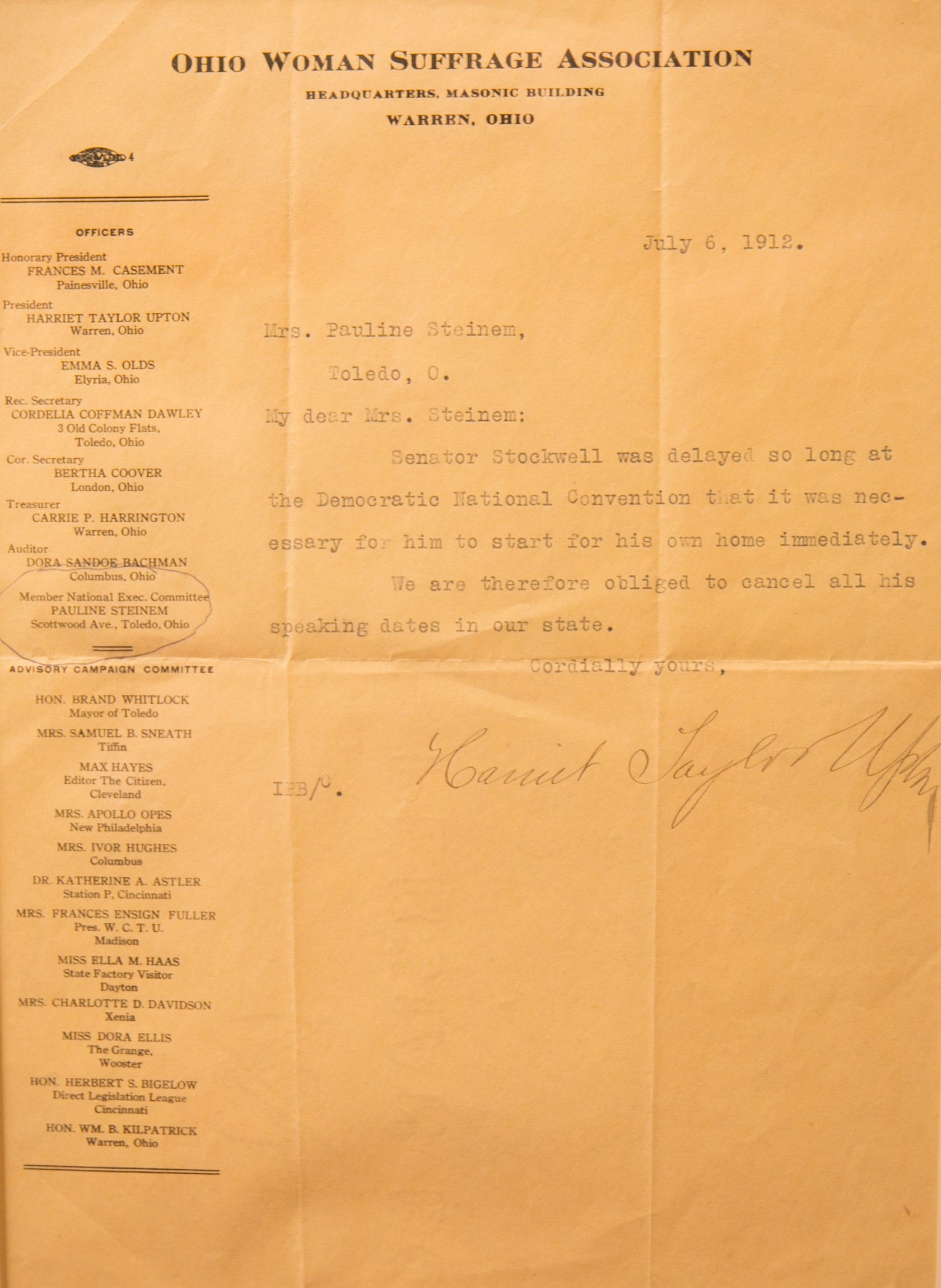
Ohio suffragist Harriet Taylor Upton and Pauline Perlmutter Steinem both served as Officers of the Ohio Woman Suffrage Association. In this letter, Upton, who at the time was President of the Association, wrote directly to Steinem to report Senator Stockwell had to cancel all Ohio speaking engagements due to delays at the Democratic National Convention.
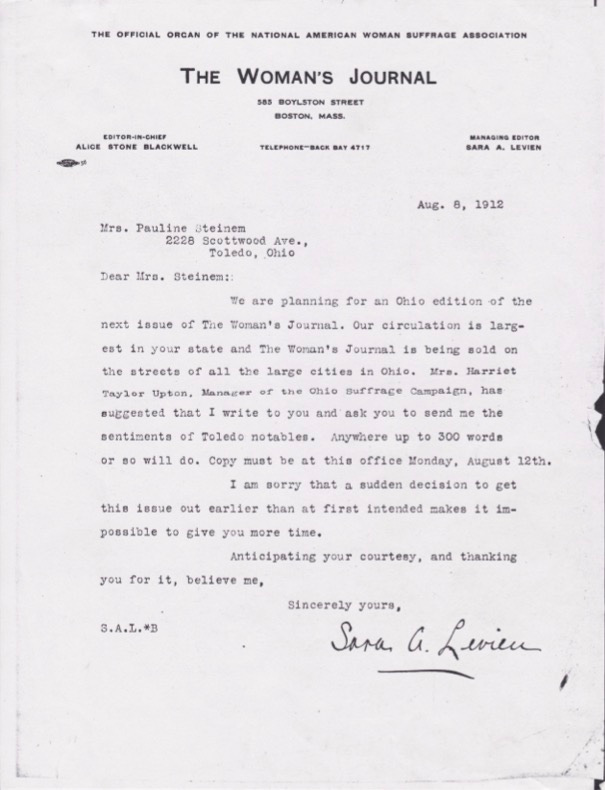
This 1912 letter to Pauline Perlmutter Steinem is from Sara Levien, Managing Editor of The Woman’s Journal, the National American Woman Suffrage Association’s publication. Harriet Taylor Upton suggested that Levien write to Steinem ahead of the publication of an Ohio edition of The Woman’s Journal given Steinem’s involvement with the Toledo suffrage movement.
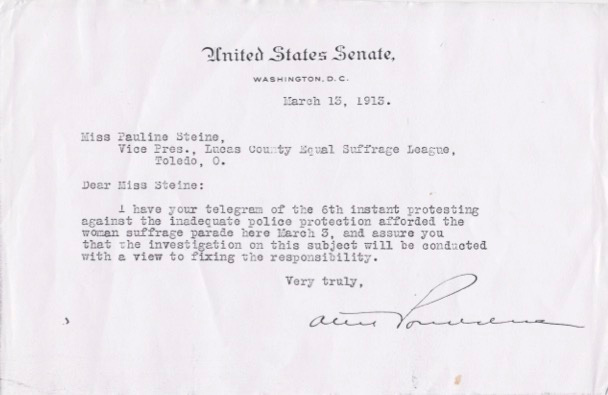
Atlee Pomerene, who served as Lieutenant Governor of Ohio from 1910-1911 and served as a Democratic Senator from 1911-1923, sent a letter directly to Pauline Perlmutter Steinem, who was serving as the Vice President of the Lucas County Equal Suffrage League in Toledo. Steinem sent him a telegram in protest of “inadequate police protection afforded [to] the woman suffrage parade” which took place March 3, 1913 — a reminder of the violence suffragists often faced.